September 28, 2026
TF #165 Is Operational Friction Costing You Loyal Customers?
Whether you’re starting from scratch with encouragement from those close to you, or you’ve got a culinary background, your skills have sharpened, your palate has expanded, and your ambition is fueled by a genuine love for food. But somewhere along the way, that love started fighting for air under the weight of operations—orders, prep, shopping, labels, delivery windows, DMs, spreadsheets, and a to‑do list that never ends.
What looks like a quick, easy heat‑and‑eat product to your customer is actually the result of hours of planning, attention to detail, and more than a few sweats (and maybe tears). What began as a passion project became a side hustle that put extra money in your account—and you know there’s more in you and more people you could serve. But you’re wondering: Can I keep up with orders? Why is grocery waste eating my margin? How do I grow without burning out?
You’re not alone. There’s a whole community of Foodpreneurs who share this passion—and this tension. And it leads to the big question:
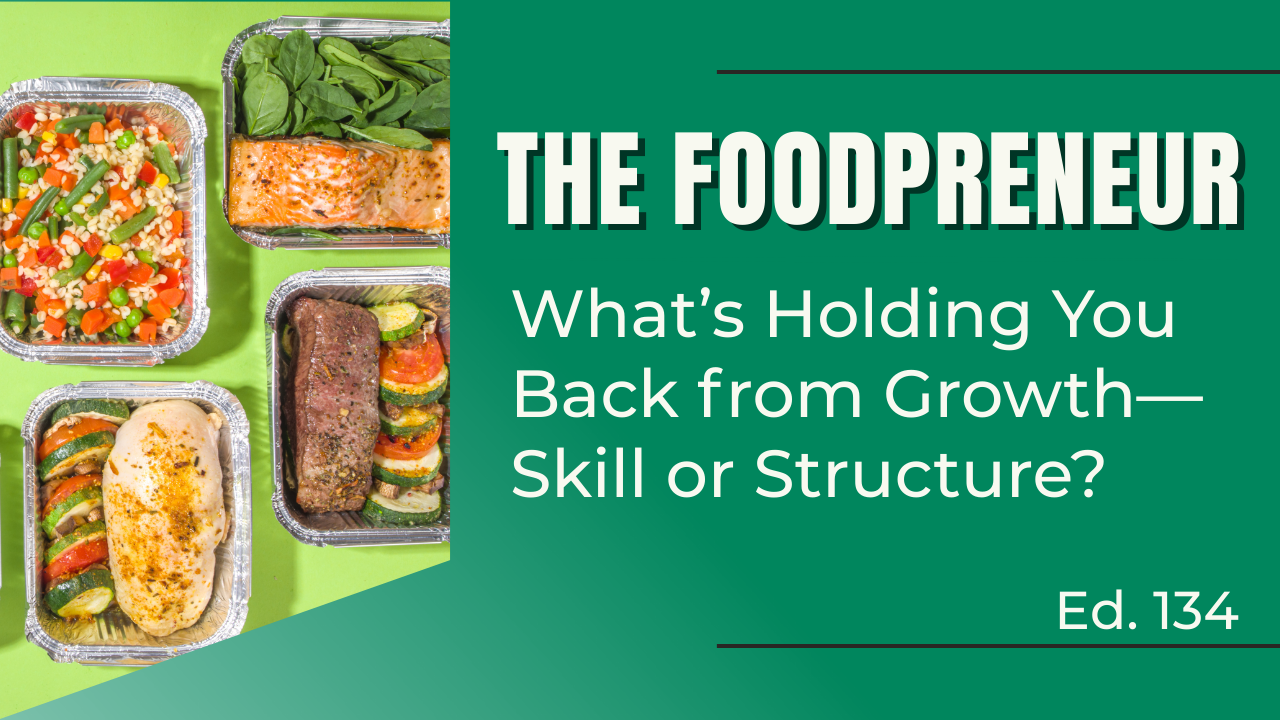
Is It a Skill Problem… or a Structure Problem?
Here’s the truth most founders don’t hear enough: lack of growth isn’t a talent issue. Your menu is strong. Your customers love your flavors. Your standards are high.
The ceiling you’re hitting is almost always structural, not culinary. Skill gets you customers; structure helps you keep them—and scale. Structure is the boring, beautiful backbone of a business that runs the same way every week: clear workflows, predictable production, tight inventory, reliable handoff, and clean numbers that tell you what to do next.
Your business can be great because of your skill — but it only grows because of your structure.
Signs You’re Bumping into a Structure Ceiling
If these feel familiar, it’s not a reflection of your ability—it’s a signal your systems need attention.
None of these are “be better at food” problems. They’re “build better systems” problems.
Why Structure Creates Space for Creativity (and Growth)
Structure isn’t red tape—it’s relief. The right systems:
When the basics run on rails, your creative energy returns. You stop firefighting and start designing. You stop improvising and start optimizing.
The Big Reframe: It’s Not You — It’s Your Systems
Let’s circle back to the question: What’s holding you back—skill or structure?
If you’re reading this, chances are your skill got you here. Demand exists. Customers are waiting. Your team (even if it’s just you) cares.
What’s missing is a framework—a digital backbone—that supports growth without draining your brain. That’s exactly where tools like MealTrack fit: transforming invisible work (planning, purchasing, production, pack‑out, and analysis) into a clear, repeatable system.
No heroics. No more “new week, new chaos.” Just a business you can trust.
A Practical First Step (Do This This Week)
You don’t need a total overhaul to feel relief. Pick one starting point and give it 60–90 focused minutes.
Small improvements compound. That’s your optimization flywheel starting to spin.
Conclusion: Your Skill Got You Here — Structure Will Take You Further
You don’t need to become a different kind of founder to grow. You don’t need to tame your creativity. You just need systems that carry the weight so you can do your best work.
There’s a community of Foodpreneurs walking this path—choosing calm over chaos, clarity over guesswork, and sustainability over burnout. You’re not behind. You’re building.
Systems protect creativity—MealTrack unlocks your time MealTrack gives you space to think bigger, experiment more, and focus on what matters: growth, innovation, and customer connection.