September 28, 2026
TF #165 Is Operational Friction Costing You Loyal Customers?
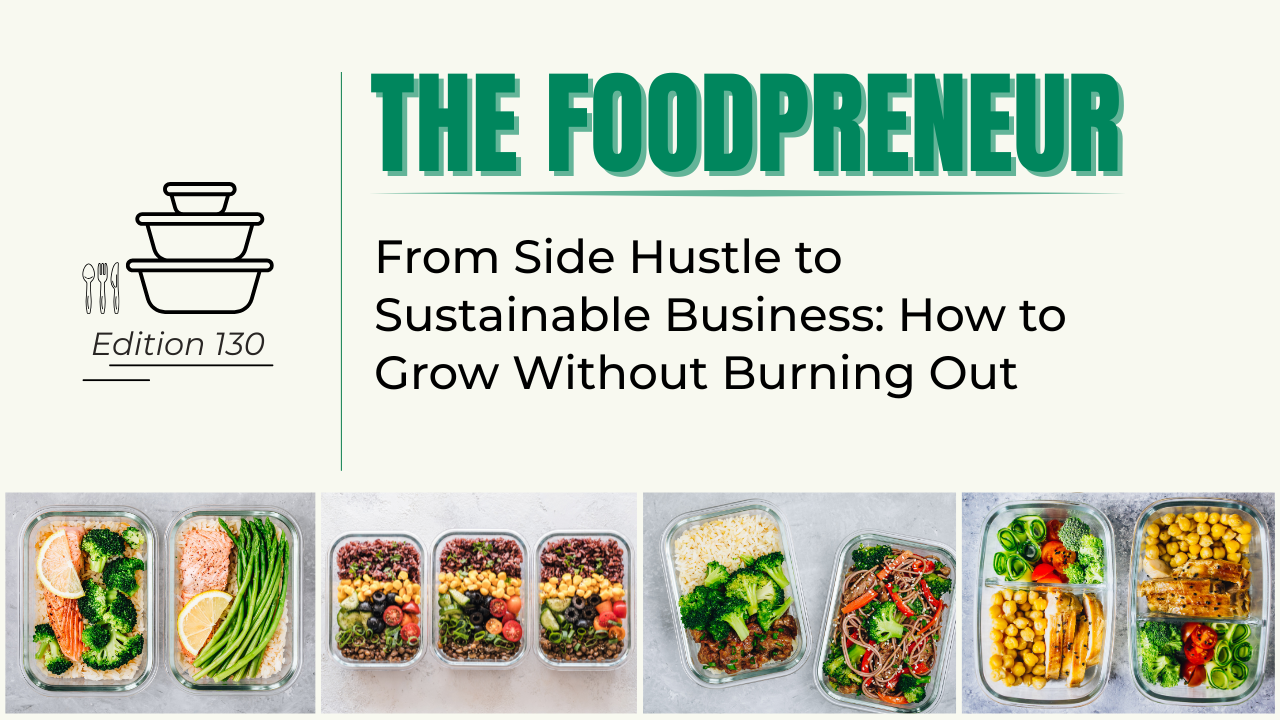
When you first launched your meal delivery side hustle, it was probably a passion project. Maybe you were cooking for friends, prepping healthy meals on weekends, or seeing if you could sell a few dozen orders a week to cover some extra bills. You weren’t building an empire. You were just trying something new.
But somewhere along the way, it started to grow. More orders came in. Customers came back. Word spread. And suddenly, your "little weekend thing" turned into a full-blown business.
Exciting? Absolutely. Exhausting? Also yes.
Scaling a food-based side hustle into a sustainable business is no small feat. It takes more than great meals. It takes systems, strategy, and boundaries. And it takes a mindset shift: from “doing it all myself” to “building something built to last.”
This post is for every meal prep entrepreneur who’s hit that turning point: the moment when more success brings more stress. Let’s talk about how to grow without burning out.
#1. Get Real About What’s Working and What’s Not
If you’re feeling overwhelmed, the first step is a gut-check. Not everything that’s making you busy is making you better. That’s why sustainable growth starts with a brutally honest audit. Ask yourself:
A few truths might emerge:
And if that happens? It might be frustrating in the moment but, remember, it’s a good thing in the long run. Clarity leads to better decisions. And better decisions lead to a business that serves you, not the other way around.
2. Build Repeatable Systems Before You Add More
One of the most common traps in scaling is adding volume before building infrastructure. You increase orders, but don’t yet have systems that can handle that growth without chaos. The result? You end up spinning plates instead of scaling. Here’s what we recommend before you even think about doubling order volume:
Build out your core systems:
The goal here isn’t perfection, it’s repeatability. If someone else walked into your kitchen tomorrow, could they figure out how to run a normal week? If the answer is no, you don’t need more orders. You need more structure.
3. Know When to Say No
One of the most empowering parts of becoming a business owner is realizing that you don’t have to do everything just because you can. We’ve seen this time and again with meal delivery founders:
That kind of hustle gets you off the ground, but it can’t sustain you long term. At some point, scaling means choosing. Here's what that can look like:
Your business gets better (not smaller) when you stop trying to say yes to everything.
4. Price for Sustainability, Not Scarcity
Let’s talk about money – specifically, the tendency to underprice when you’re growing.
When your business started, you might’ve priced low to build traction. You wanted customers to try your meals. You didn’t want to scare people off. You weren’t sure you could charge more. But if you’re scaling now and still pricing like you’re a startup? That’s a fast track to burnout.
Low prices might fill your schedule, but they don’t build margin – margin for help, for time off, or for growing – the business beyond you.
Here’s what we saw work in 2025:
Bottom line: If you’re always on the edge of exhaustion and your margins don’t allow for help, you’re not charging enough.
5. Stop Operating Alone
Burnout thrives in isolation. That’s true emotionally, but also operationally.
Many founders hit a wall because they’re trying to do everything solo: cook, shop, market, post on Instagram, design labels, answer every email, run the finances. Here’s what a smart scale-up looks like:
If your instinct is “No one else can do it like I can,” we get it. But the goal isn’t to clone yourself. The goal is to offload the things only you shouldn’t be doing. You don’t need to go it alone. And frankly, if you want to sustain this business, you can’t.
6. Redefine Success (and Build Around It)
Maybe you started this hustle to make extra money. Maybe now it’s your full-time gig. Maybe you’re eyeing a storefront or scaling into multiple cities. And now you get to decide what success looks like. Not Instagram. Not the comparison trap. Not that coach who says you’re not winning unless you’re hitting six figures in six months.
Sustainable growth means building around the life you actually want, not someone else’s idea of it. So ask yourself:
There’s no wrong answer, just the one that works for you.
7. Build with Burnout in Mind
Finally, here’s the lesson we wish every food entrepreneur heard in year one: If your business only works when you’re at 110%, it doesn’t work.
Sustainable growth isn’t about never working hard—it’s about building a business that still functions when life happens. When you’re tired. When you’re sick. When you just want a day off. That means:
Your business should be a vehicle for the life you want, not a full-time job you accidentally created with worse hours and no benefits.
Final Thoughts: You Can Grow and Still Like Your Life
You’ve already done the hardest part: you started. You got customers. You proved there’s a market. You’ve built something people want. Now comes the shift: building something that works long-term, for your customers and for you. So if you’re at the edge of burnout, know this:
And we’re here to help.
Want to scale your food business without burning out? MealTrack helps meal delivery founders automate operations, manage growth, and streamline weekly workflows, so you can spend more time cooking (and living), and less time chasing spreadsheets. Let’s talk about how to set your side hustle up for sustainable success in 2026.